In-Canopy Disease
Risk Monitoring.
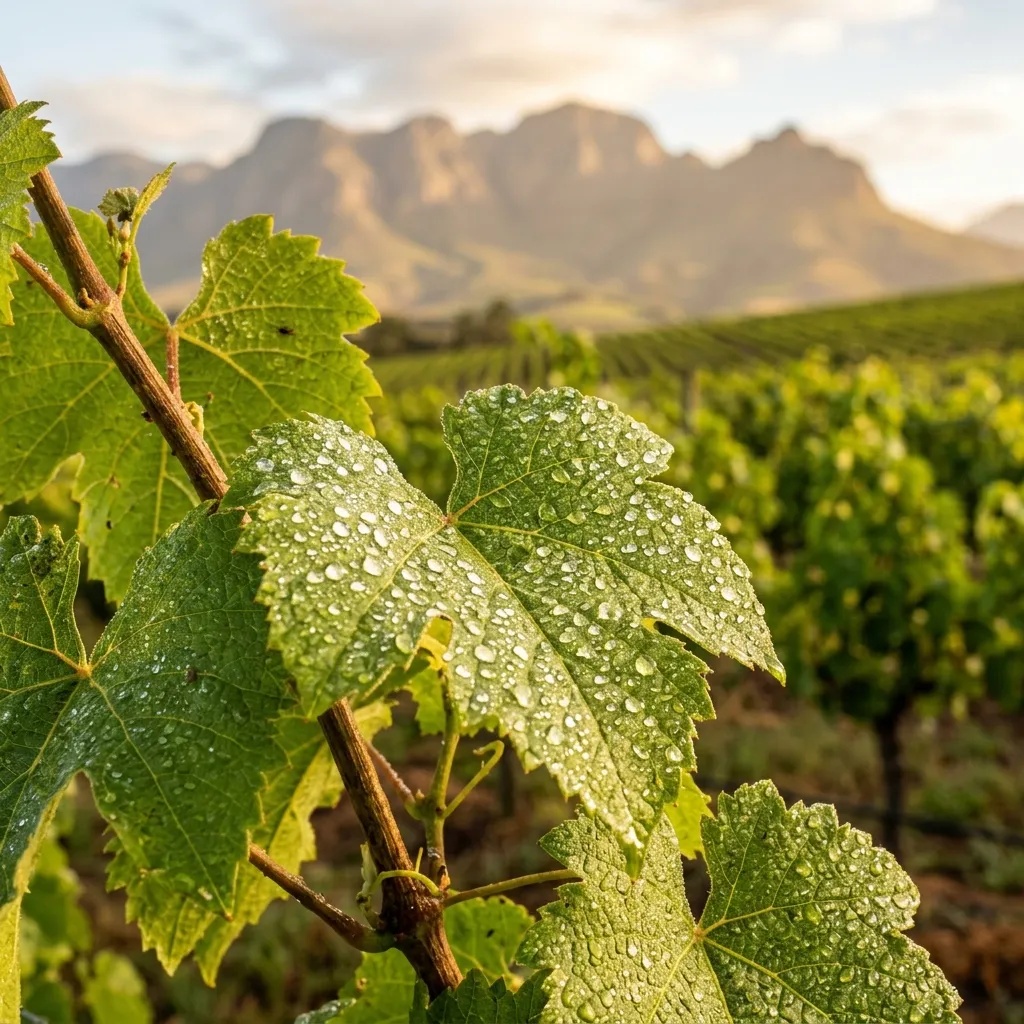
Fungal pathogens develop in specific microclimates within the vine canopy. By monitoring leaf wetness duration, relative humidity, and temperature directly in the vine rows, Véraison provides growers with localized data to evaluate infection risk and plan applications effectively.
Leaf Wetness
Surface Moisture Duration
Canopy Temp & RH
In-Row Microclimate
Barometric Trend
Incoming Front Alerts
Wind Speed
Drift & Spray Conditions
How canopy microclimates drive fungal development.
Plant pathology establishes that fungal infection requires three intersecting components: a susceptible host, the presence of pathogen inoculum, and favorable environmental conditions. While host phenology changes across the season, environmental factors—primarily free moisture and temperature—dictate whether spores can successfully germinate and colonize tissue.
Leaf Wetness Sensor
Measures the duration (hours and minutes) of free surface water on canopy foliage caused by dew, fog, or rainfall—the primary requirement for fungal spore germination.
Canopy Temp & Humidity
Measures temperature and relative humidity within the canopy foliage, where shaded conditions preserve higher humidity and moderate temperatures longer than open-field stations.
Barometric Pressure
Tracks approaching low-pressure fronts and barometric drops before rain events, assisting teams in scheduling preventative protectant sprays before precipitation begins.
Wind Speed & Direction
Monitors on-site wind conditions to identify safe, drift-free spray application windows and recognize calm inversion conditions where airborne droplets may remain suspended.
Moving from fixed intervals to weather-driven timing.
Vineyard spray programs frequently rely on recurring calendar cycles (such as every 10 to 14 days) or regional airport weather reports. In undulating terrain, this approach presents clear operational trade-offs:
Limitations of Calendar Routines
- •Spraying during prolonged dry periods: Chemical applications made when foliage has had zero free moisture and low humidity consume fuel and active ingredients without biological necessity.
- •Unanticipated wash-off: Sprays applied shortly before unpredicted localized downpours can be washed from foliage before adequate drying and binding occur.
- •Topographical variation: Low valley hollows with prolonged morning dew are often managed on the same timeline as high, breezy ridgelines where leaf tissue dries hours earlier.
How In-Canopy Telemetry Helps
- Documenting actual leaf wetness hours: Confirms whether free surface moisture has persisted long enough at prevailing temperatures to meet biological infection criteria.
- Barometric front tracking: Alerts managers to impending precipitation trends, assisting with timely protective coverage before rain arrives.
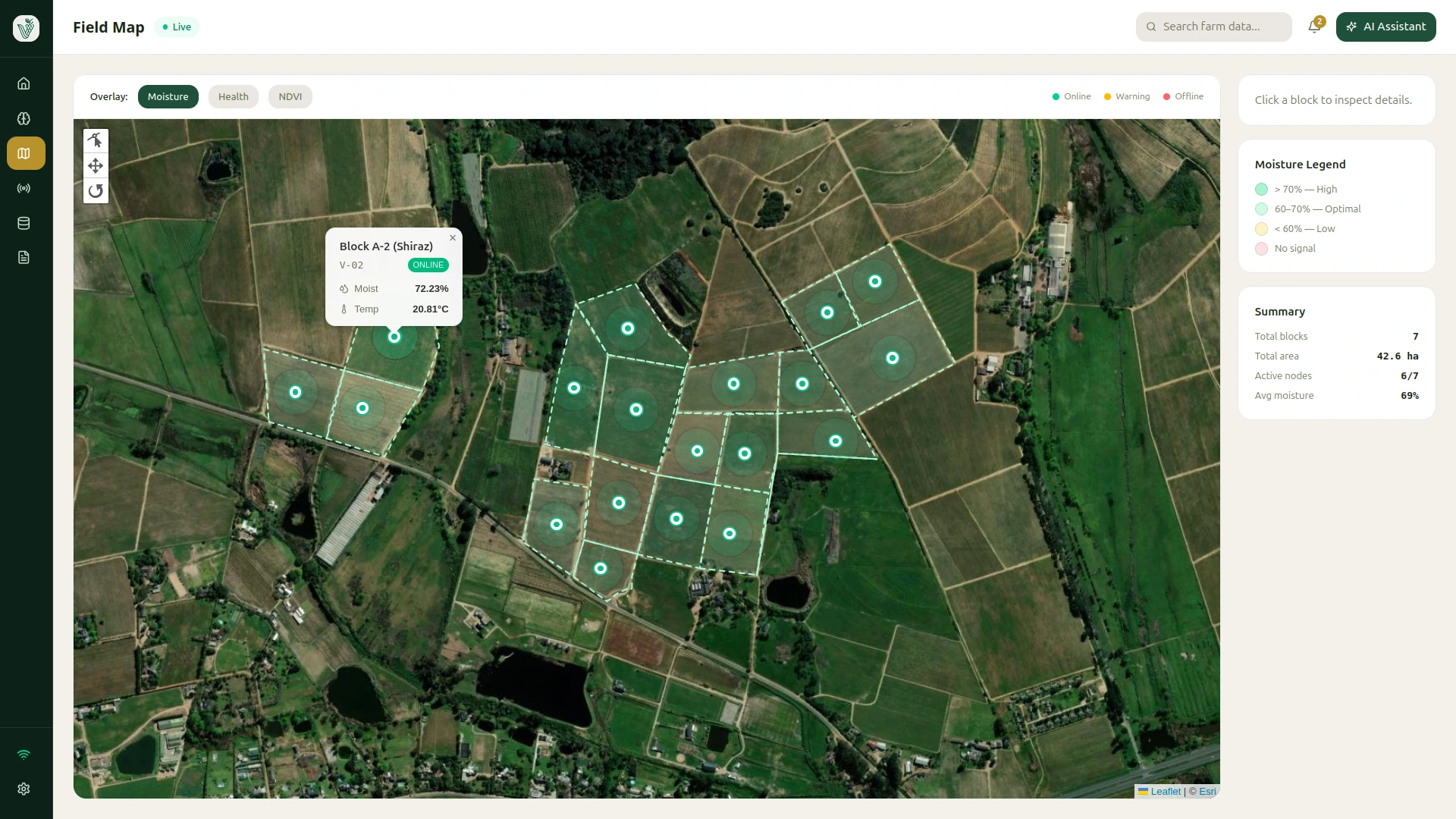
- Accounting for block microclimates: Enables managers to identify which specific vineyard blocks remain wet longest, informing prioritization when tractor capacity is limited.
Telemetry measured directly at the vine row.
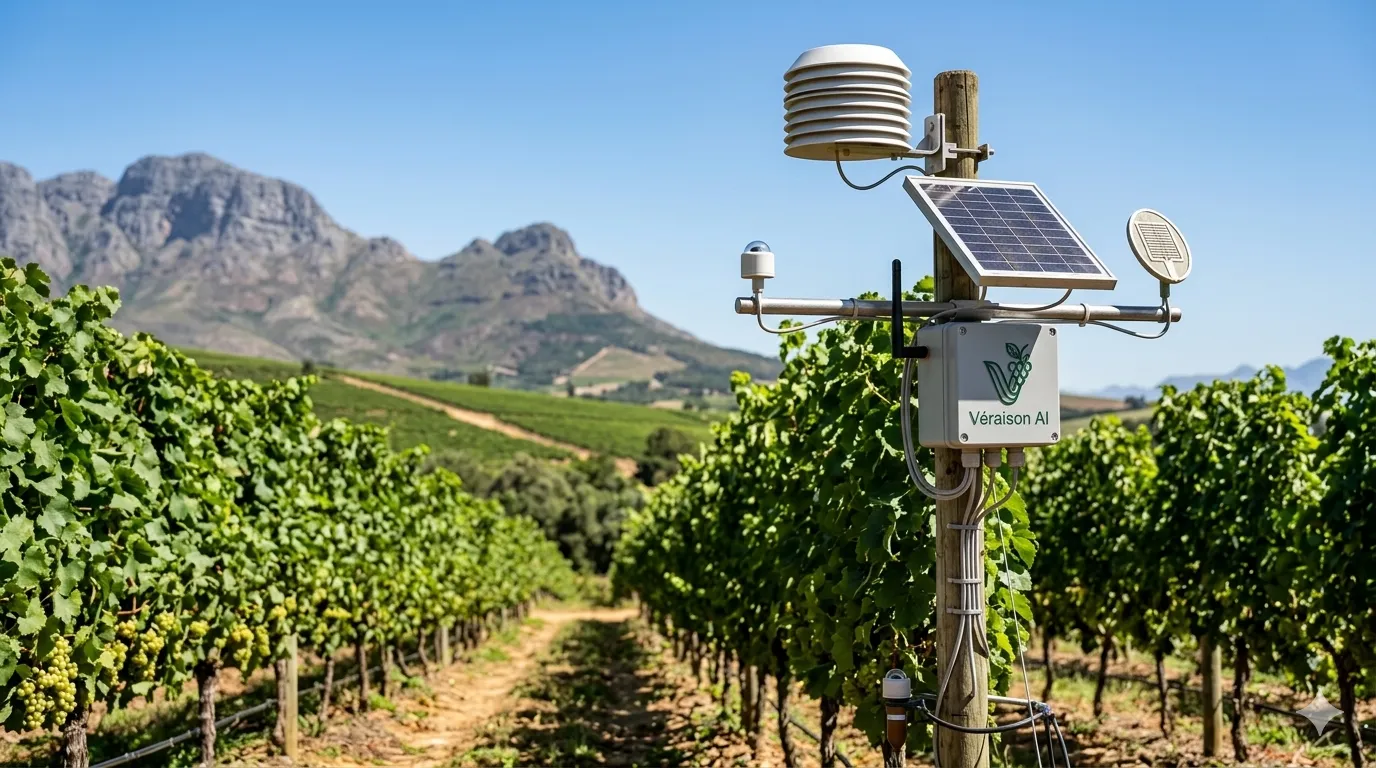
Regional weather stations are commonly installed at open airstrips or hilltop towers. However, fungal spores incubate inside dense canopy foliage where leaves shield moisture from wind and sun.
The Véraison Node mounts directly to vineyard trellis posts within the row. The leaf wetness grid measures moisture retention alongside ambient canopy temperature and humidity, transmitting field readings to the Véraison portal for remote review.
Diseases we predict.
Continuous microclimate telemetry tracking infection thresholds and leaf wetness duration across your crops.
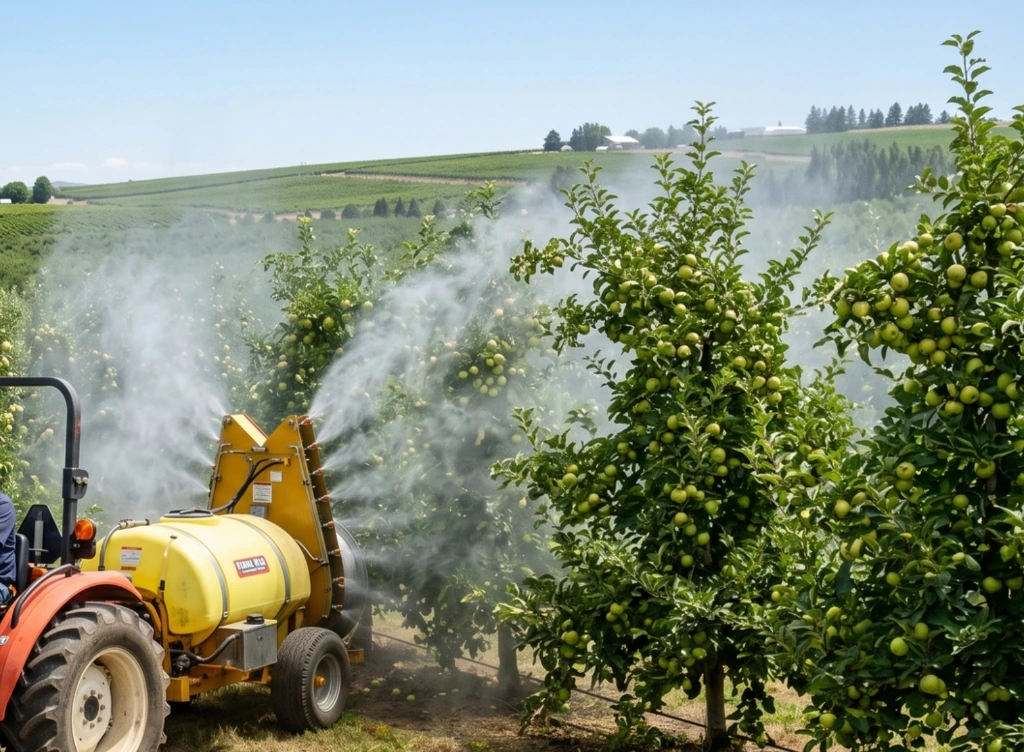
Monitoring field weather for effective spray application.
Even with timely disease alerts, chemical applications fail if weather conditions at the moment of spraying lead to off-target drift, rapid droplet evaporation, or premature wash-off.
Véraison’s on-site anemometer and ambient sensors provide real-time readings to help vineyard operators verify appropriate application windows before dispatching tractors.
Explore Other Operational Solutions
Discover how Véraison transforms weather and soil telemetry across your estate.
Ready to see your estate differently?
Apply for access and have your first Véraison Sensor Node installed ASAP.