
Crop Phenology &
Harvest Readiness.
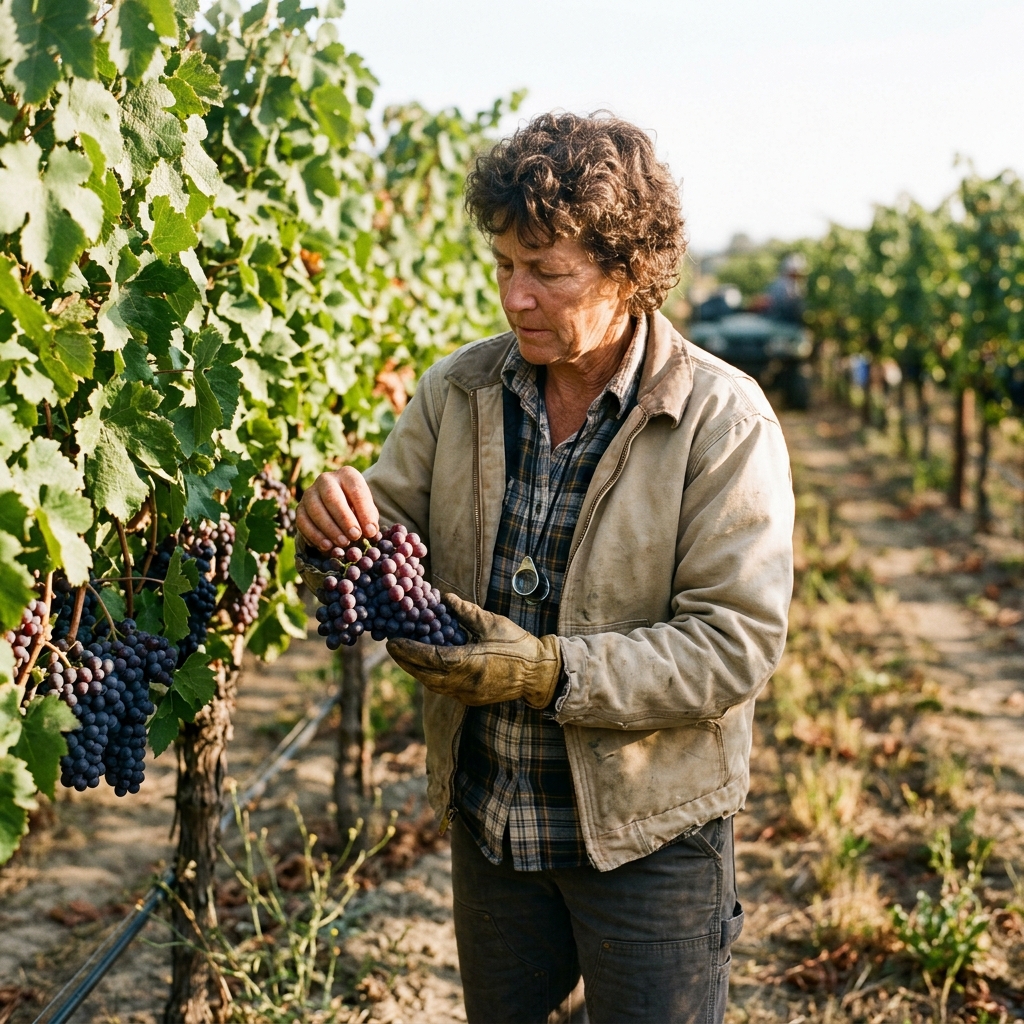
Crop development, fruit sizing, and ripening pace are governed by cumulative environmental energy. By measuring Growing Degree Days (GDD), solar radiation flux, and root-zone water availability directly in each block, Véraison provides growers with localized microclimate data to follow crop phenology and prepare for harvest timing.
Growing Degree Days
Thermal Accumulation
Solar Radiation
Pyranometer W/m²
Moisture History
Root-Zone Hydration
Spatial Variance
Aspect & Ripening Pace
How cumulative microclimate data informs crop progress.
While visual cluster counts and manual berry sampling remain essential vineyard practices, extrapolation across large hectarage is inherently vulnerable to sampling error. Grounding manual assessments in continuous microclimate records provides a clear physiological picture of crop development.
Flowering & Cluster Initiation
Tracks ambient temperature and weather stability during flowering and pollination, recording the thermal conditions under which ovule fertilisation and fruit set occur.
Early Berry Sizing & Moisture History
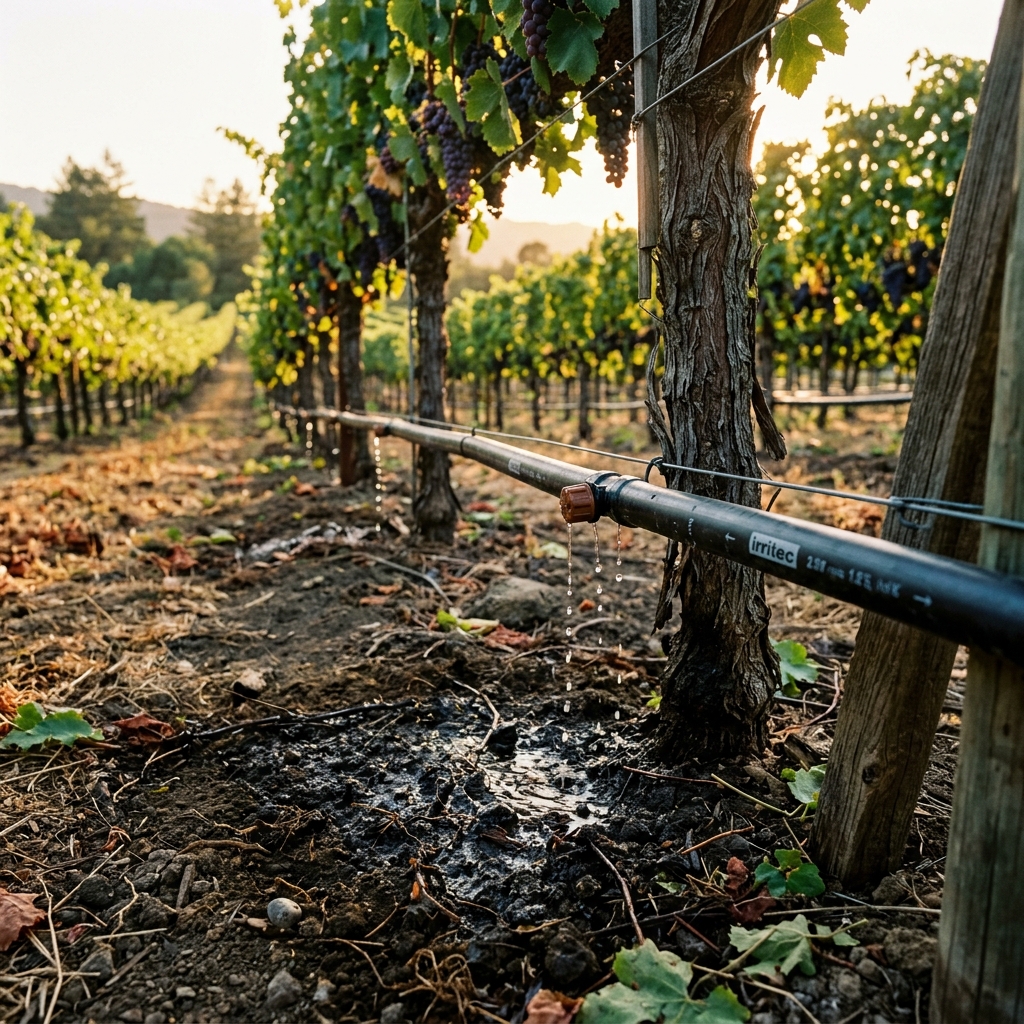
Monitors root-zone soil moisture and canopy VPD during rapid cellular division. Water stress during this window places a physiological limit on final berry volume and cluster weight.
Thermal Accumulation & Ripening Pace
Tracks accumulated solar irradiance and thermal degree-days to monitor the pace of ripening, assisting managers in scheduling sampling and projecting harvest sequences.
Environmental drivers of harvest readiness.
Three primary environmental factors dictate seasonal progression, final fruit volume, and sugar accumulation:
Growing Degree Day (GDD) Tracking
Plant biological development correlates closely with cumulative heat accumulation above a baseline threshold (e.g. 10°C). Tracking seasonal GDD pace indicates whether blocks are developing ahead of or behind historical averages.
Solar Radiation (PAR) Load
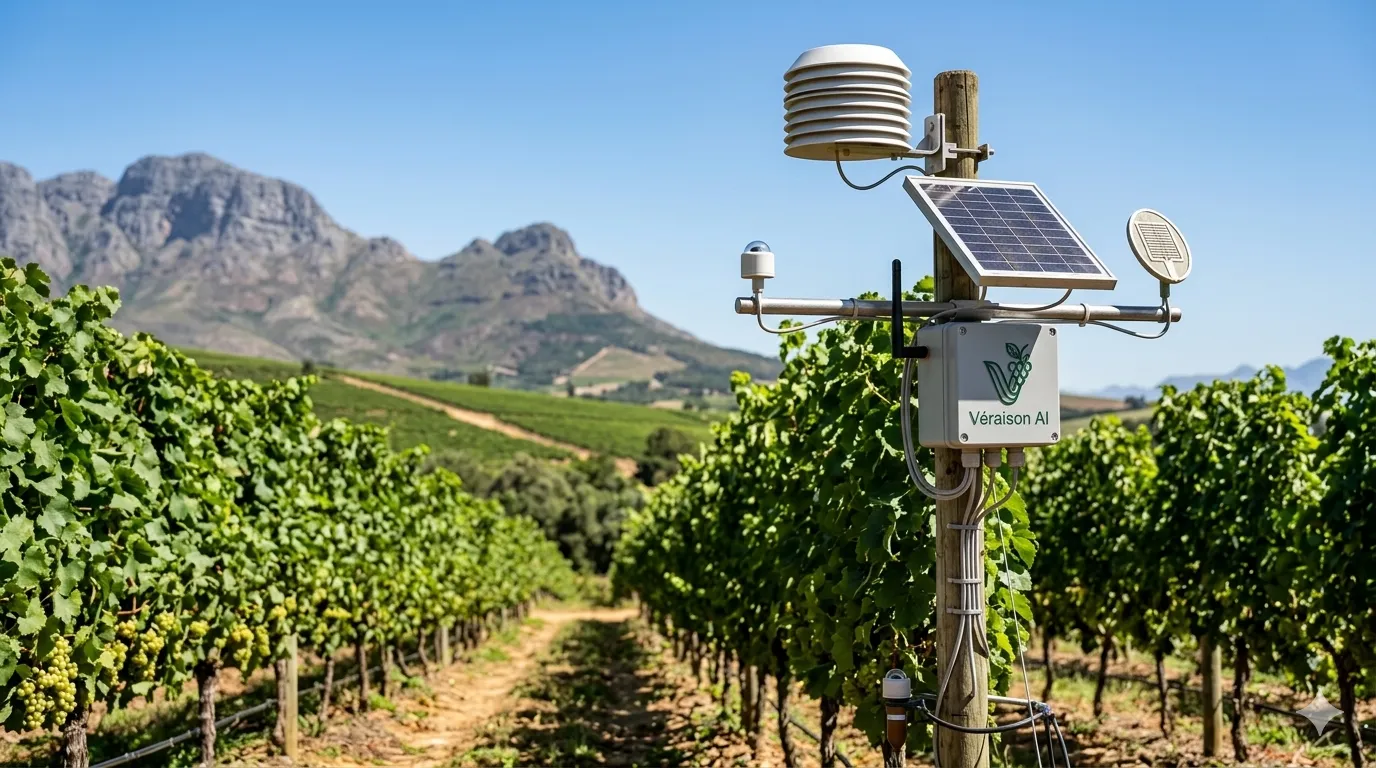
Photosynthetically Active Radiation measured by our pyranometer quantifies the solar energy available for carbon assimilation and sugar synthesis, capturing differences created by slope aspect and canopy exposure.
Moisture Stress History
Continuous records of root-zone soil moisture and atmospheric VPD capture the cumulative water stress experienced by the crop, providing valuable context on fruit sizing potential.
Accounting for block-by-block ripening differences.
Most agricultural properties feature diverse terrain. North-facing slopes in the southern hemisphere absorb significantly more solar radiation than southern aspects, accumulating Growing Degree Days faster than cooler valley depressions.
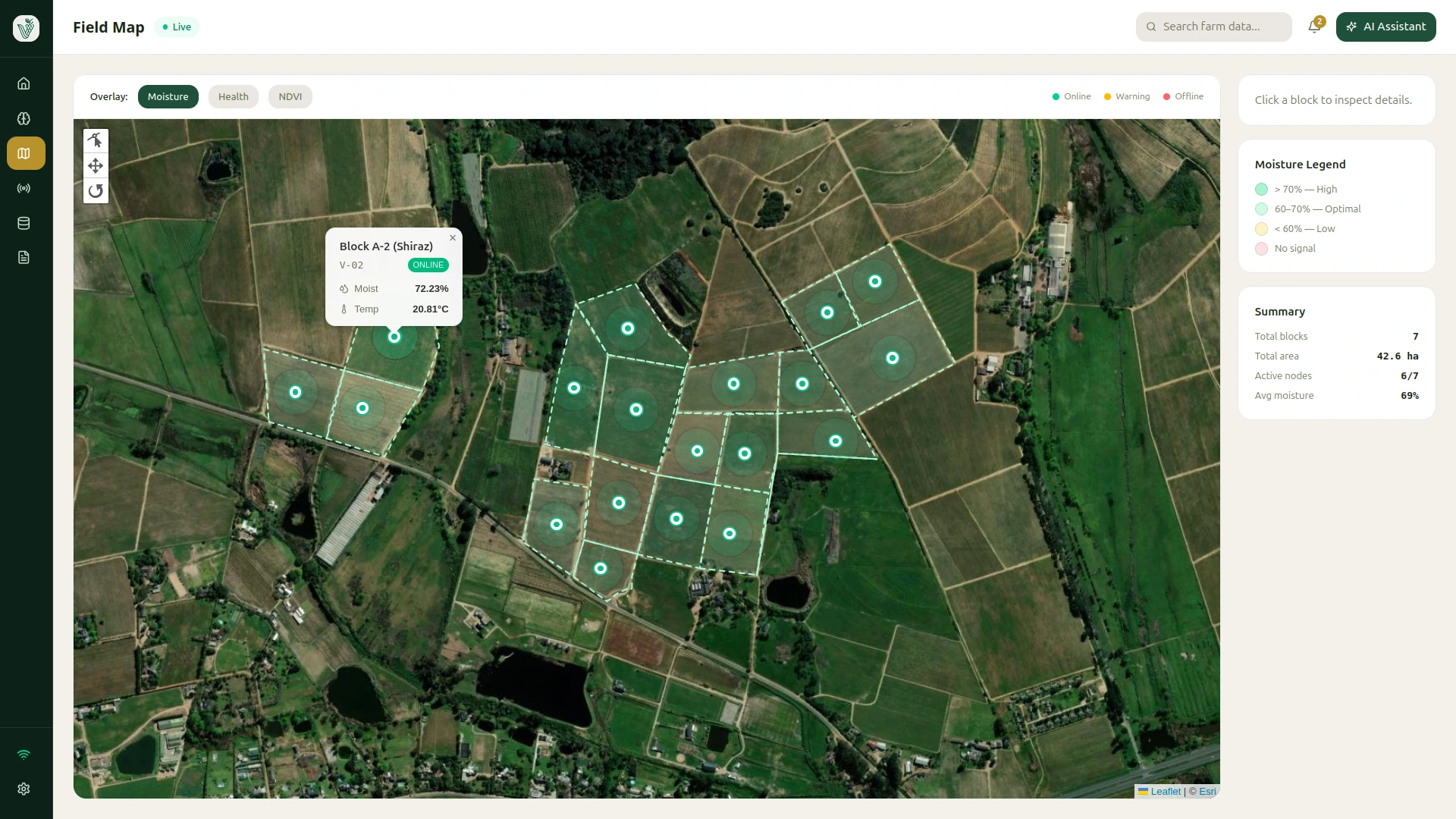
By capturing microclimate data at individual station nodes, Véraison helps growers observe which blocks are accumulating heat and solar radiation fastest, assisting with sampling prioritisation and harvesting sequences.
Explore Other Operational Solutions
Discover how Véraison transforms weather and soil telemetry across your estate.
Ready to see your estate differently?
Apply for access and have your first Véraison Sensor Node installed ASAP.